Event Details
Date
October 16, 2025
Time
9:00am ET
Location
York University
4700 Keele Street, North York,
Join NACDI for a session at the 2025 Universities Art Association Conference addressing the global role of visual art exhibitions.
Panel date and time TBD
October 16-18, 2025, York University, Toronto
Winning Friends and Influencing People: The International Art Show in the Age of Cultural Diplomacy
The art of diplomacy encompasses a range of actors and institutions—artists, diplomats, patrons, state representatives, publics—and can take shape as gifts of art, touring exhibitions and state collections, art in embassies, and participation in biennials. Building on research establishing the study of exhibitions as a subfield of the discipline (Ferguson, Greenberg, Nairne 1996; Koskinen 2024), we focus on exhibitions and their capacity as a powerful form of identification and influence. Recognizing that art has long been framed in terms of national identity, the papers presented in this panel explain how exhibitions function in an international context to advance geopolitical identities, including those beyond the nation—for instance, serving to buttress regional formations like North America or reinforcing commonalities as part of bilateral ties. These papers address the global field of art history, including discussions of curatorial frameworks, media coverage, programming, and the social spaces created around exhibitions.
Panel Chair: Sascha Priewe, Director of Collections & Public Programs, Aga Khan Museum
Panelists:
Lynda Jessup, Queen's University, "Cultural Diplomacy and the Art of Prestige"
This paper examines the prestige show as an international exhibition type closely tied to the practice of cultural diplomacy. Exploding into the public scene in the 1970s, the prestige exhibition has been called many things–the state-sponsored loan exhibition, the détente show, the foreign-policy exhibition, the blockbuster. Canada’s Department of External Affairs developed the type in the early postwar years in connection with its growing interest in information and cultural work, and by 1960 was directing increased attention to what it called “the need to provide art exhibits for tour abroad for general prestige purposes.” Internally, members of the Department argued repeatedly–invariably with reference to the divergent aims of the National Gallery of Canada’s international program–that the prestige exhibition provided a means of promoting Canada’s political and cultural relations with other countries. While they recognized the value the National Gallery saw in sending Canadian art shows to countries that played a leading role in Western contemporary art, such activity was only one part of what they saw as the Department’s larger responsibility, to develop Canada’s “cultural relations on a global basis.” External Affairs identified such “global work” with the prestige exhibition and, increasingly into the late 1960s, the efficacy of cultural diplomacy as an international language of influence and authority. The blockbuster’s rise to prominence in the 1970s was the result, the type attaining international status in the context of what Canadian government officials described as the “vogue” for cultural agreements at the international level.
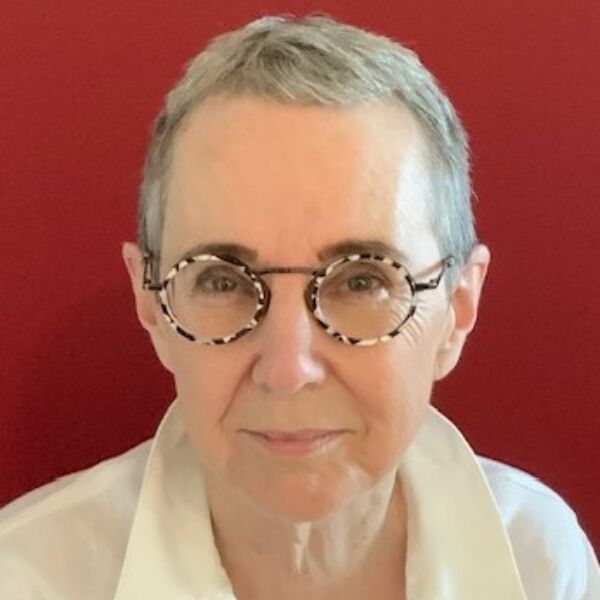
Lynda Jessup is Vice Dean in the Faculty of Arts and Science at Queen's University on the traditional lands of the Haudenosaunee and Anishinaabe peoples. She is Director of the North American Cultural Diplomacy Initiative (NACDI).
Shasha Liu, University of Toronto, "Navigating People’s Art with Unfamiliar Brothers: The 1957 Dunhuang Exhibition in Czechoslovakia and Poland"
This paper examines the 1957 exhibition of mural reproductions from the Mogao Caves in Dunhuang—an ancient Buddhist site in northwestern China—that toured Czechoslovakia and Poland as a case study of trans-socialist cultural diplomacy during the early Cold War. While existing scholarship has conducted preliminary research on post-1949 diplomatic and cultural ties between China and Eastern Europe, this exhibition provides a compelling lens to analyze how art functioned simultaneously as a symbol and vehicle of socialist internationalism. Drawing on press coverage and exhibition catalogues, this paper investigates how Dunhuang’s religious and premodern iconography was reframed as a monument of shared socialist heritage. Emphasizing worldly themes and real life representation as features of “people’s art,” the exhibition foregrounded a sinicized visual tradition while articulating a version of socialist realism distinct from the Soviet model. It argues that the People’s Republic of China used the exhibition to assert cultural authority through an aesthetic rooted in Chinese historical experience, while Eastern European audiences engaged with it to explore alternatives to Soviet cultural orthodoxy. By foregrounding the Dunhuang exhibition’s role in mediating the triangular relationship between the Soviet Union, its Eastern European satellites, and the PRC, this case reveals how exhibitions became platforms for negotiating ideological affinities. Ultimately, the paper contributes to broader discussions on Cold War exhibitionary practices, cultural diplomacy, and the construction of socialist modernities beyond Soviet paradigms.
Shasha Liu is a historian of modern and contemporary East Asian visual culture and popular culture, with a focus on China, and teaches at the University of Toronto and York University.
Sarah E.K. Smith, Western University, "The Art of NAFTA"
The 1989 Canada-US Free Trade Agreement and 1994 North American Free Trade Agreement (NAFTA) reinvented the concept of North America as a cohesive whole, united by free trade. But within the bold concept of continental unity lay a paradox. While art was mobilized to frame the new narrative, culture itself was explicitly excluded from the agreements that implemented this vision. Examining government-supported cultural diplomacy initiatives in the late twentieth-century, I demonstrate how exhibitions functioned as a powerful means to advance and circulate new narratives about North America. My analysis of state-sponsored representative exhibitions (elsewhere labeled blockbuster exhibitions, treasures shows, and prestige exhibitions), reveals how these formations function as powerful tools for cultural diplomacy. I focus my discussion on how exhibitions were mobilized to invent a new transnational regional imaginary and to evidence shared interests amongst the governments of Canada, Mexico, and the US. I also address how art was used to build new bilateral ties between Canada and Mexico following NAFTA. My analysis includes examination of curatorial frameworks, media coverage, programming, and the social spaces created around exhibitions. I also address how settler-states utilized Indigenous visual and material culture as a point of commonality in building North American relationships—simultaneously upholding Indigenous culture as emblematic of the settler nation-state, while erasing Indigenous claims to the land. While recent challenges to North American relationships reveal the ephemeral nature of the continental mindset, my paper points to how visual art and exhibitions are vital to the dynamics of international relations.
Dr. Sarah E.K. Smith is Associate Professor and Canada Research Chair in Art, Culture and Global Relations at Western University in Canada.
Alexandra Tsay, Concordia University, "Affective regionalism and uncanny resonances across Asia(s)"
The last century has witnessed the proliferation of global biennales and international exhibitions. Biennales mediate and foster global and cross-regional connections, networks, and dialogues (Gardner, Green 2016). In the proposed paper, I will build upon the premise that international exhibitions not only reflect current cross-border interactions and existing international alliances but also provide an affective space for forming and sustaining new cross-cultural connections, informal encounters, and exchanges with like-minded people. Approaching exhibition-making as research creation and as an active process of knowledge production rather than merely a platform for presenting already established ideas (Bjerregaard 2020), I will explore the affective potentiality of the international exhibition to reveal uncanny resonances and unexpected similarities across regions. In particular, the paper will discuss the case of showcasing Central Asian art in East Asia, two regions with historical interactions but little contemporary awareness of each other’s artistic developments. Drawing on the exhibition Suture: Reimagining Ornament, which I co-curated within the larger project Clouds, Power, Ornament – Roving Central Asia at the Centre for Heritage, Arts and Textile in Hong Kong in 2023, I will reflect upon and conceptualize how art production can help defamiliarize the local and mediate proximity to the distant. The presentation will outline affinities within Central and Eastern Asias and explore the poetics of relationality that can result in the process of encountering the unknown, unfamiliar, and uncanny.
Alexandra Tsay is an independent curator and a PhD student in the Interuniversity Doctoral Program in Art History at Concordia University in Montreal.